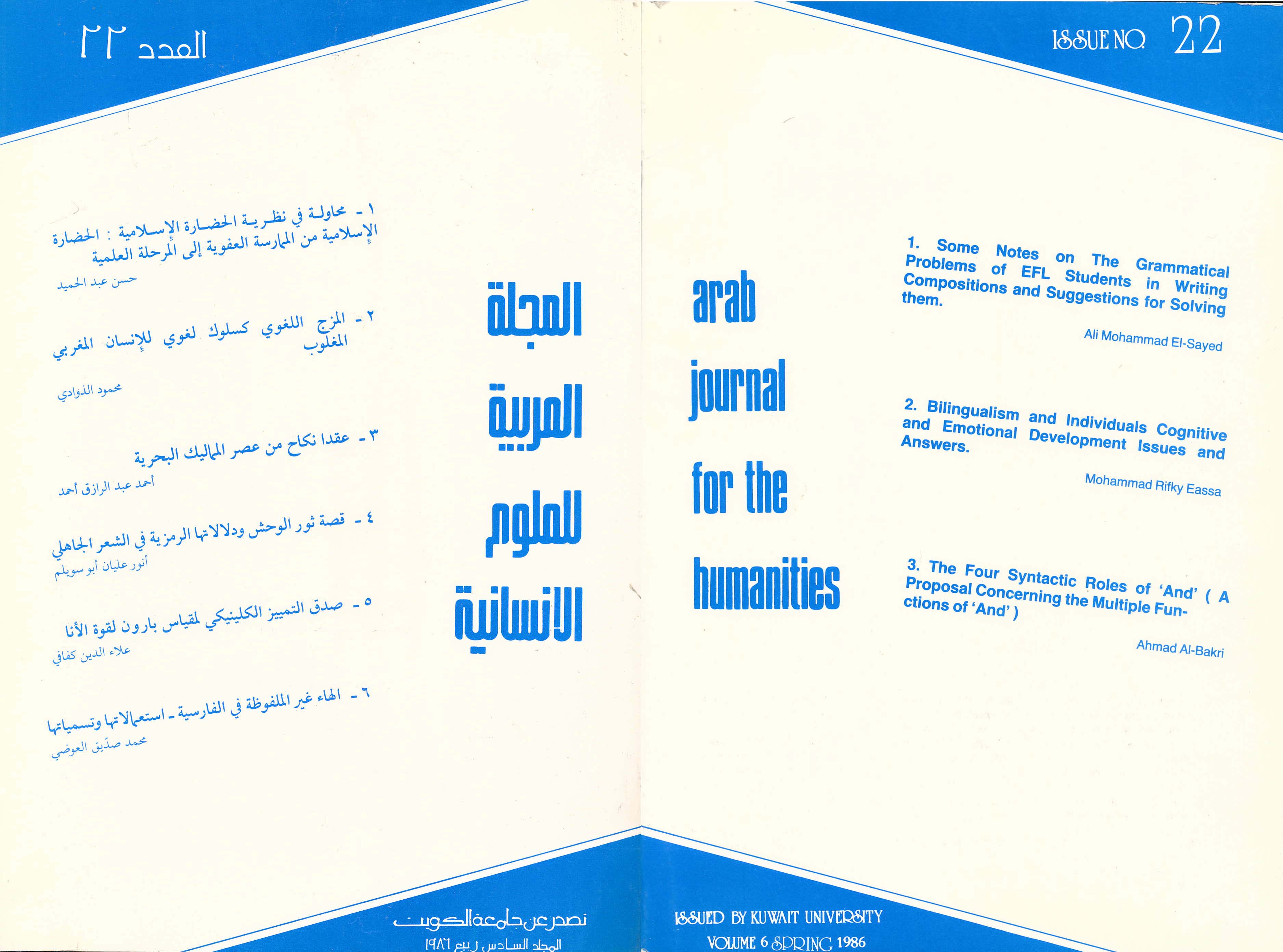
The Story of Thawer el-Wahesh and Its Symbolic Indications in Pre-Islamic Poetry.
DOI :
https://doi.org/10.34120/ajh.v6i22.999Résumé
This research deals with the story of Thawer el-Wahesh and its symbolic indications in the Pre-Islamic Poetry (Ash-She’r el-Jahily), taking into consideration the religious and methodological inheritance of the pre-Islamic Arabs that formed the symbolic image for the pre-Islamic poets, so that the repeated image in Thawer el-Wahesh springs up from the religious imagination of those poets.
The technical form in poetry, as well, had its deep roots stem from common awareness in the nation, rather than depending on individual awareness ascribed to one limited poet.
The story of Thawer el-Wahesh in the pre-Islamic poetry contained various creeds, symbols, inspirations and hints which shaped the pre-Islamic poetry in a complete mythological form. The research intends to explain the poetic images which directed the story towards symbolic formation. It ended with a conclusion that the story contained rituals: praying for rain was practiced by old Arabs who employed cows and fire in their rituals, and the ox was a magical symbol that signified obtaining rain.
Téléchargements